Craco Italy: 10 Reasons Why This Medieval Ghost Village on a Clifftop Is One of Europe’s Most Haunting Places
If you have seen the James Bond film Quantum of Solace or Mel Gibson’s The Passion of the Christ, you have already seen Craco — even if you didn’t know it. The dramatic medieval village crumbling on a clifftop in the background of those scenes is not a movie set. It is a real place. And it has been completely abandoned for over 50 years.
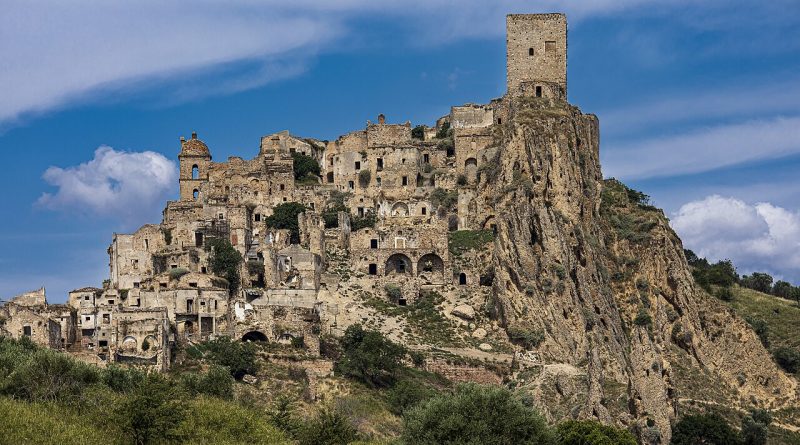
Perched on a 400-meter rocky outcrop in the Basilicata region of southern Italy, Craco is one of the best-preserved medieval ghost towns in all of Europe. Here are 10 reasons it is one of the most haunting places on the continent.
Reasons 1–3: History, Architecture, and Location
Reason 1: Craco Has Over 1,000 Years of History
Craco’s history stretches back to at least the 8th century AD, when a Greek monk settled on the commanding clifftop position and established the first community. Through the medieval period it grew into a prosperous agricultural center, reaching a population of around 2,000 by the early 20th century.
Reason 2: The Architecture Is Remarkably Intact
Unlike many abandoned villages that have completely collapsed, Craco’s stone towers, church bell towers, and medieval walls are still largely standing. The narrow cobblestone streets, stone archways, and building facades give an extraordinary sense of what medieval southern Italian life actually looked like.
Reason 3: The Location Is Breathtaking
The clifftop position that made Craco strategically valuable for medieval defenders also makes it one of the most dramatic landscape settings in Italy. The views across the Basilicata plateau from the ruins are extraordinary — a landscape of rolling hills, deep ravines, and ancient agricultural terraces stretching to the horizon.
Reasons 4–6: The Disasters That Emptied Craco
Reason 4: Mass Emigration to America Began the Decline
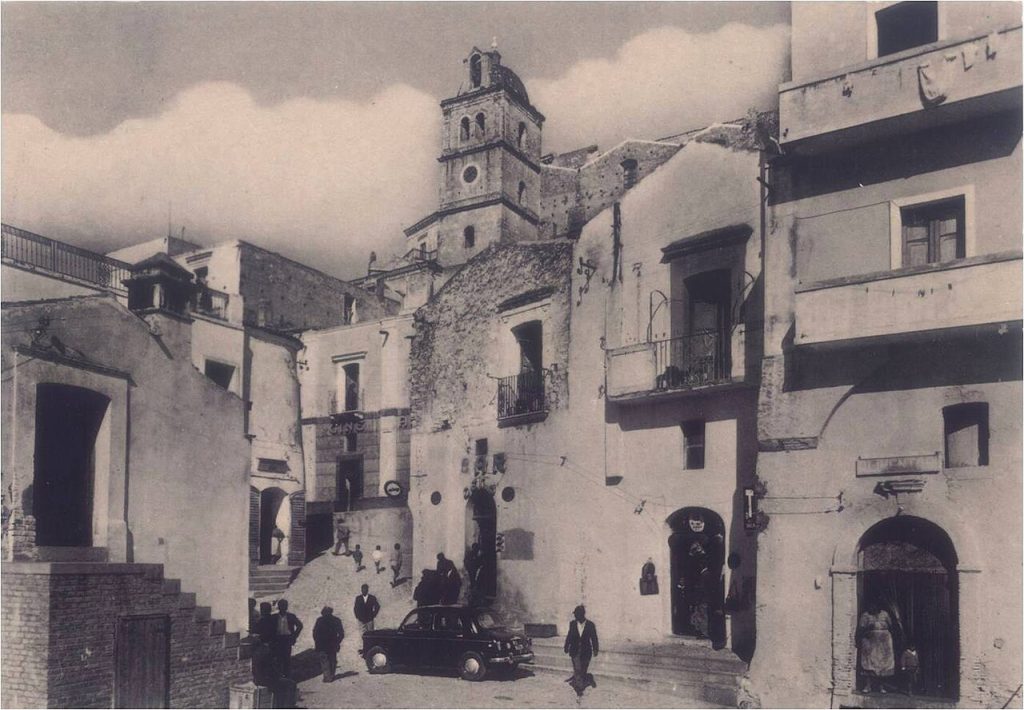
Beginning in the late 19th century, over 1,300 Craco residents emigrated to America between 1892 and 1922 — nearly two thirds of the town’s population. The community never recovered its former density.
Reason 5: The Landslides Were Unstoppable
In 1963, a major landslide forced the evacuation of 1,800 residents to a new settlement in the valley below — Craco Peschiera. The rocky outcrop that had made Craco defensible for centuries was inherently unstable, and centuries of agricultural activity had worsened the underlying geology. Subsequent landslides in 1972 and 1980 completed the abandonment.
Reason 6: The 1980 Earthquake Sealed Its Fate
A major earthquake in 1980 — the same Irpinia earthquake that killed nearly 3,000 people across southern Italy — caused additional structural damage to Craco and removed any remaining hope of repopulation. The town was officially declared uninhabitable.
Reasons 7–10: Film Locations, Tourism, and the Future
Reason 7: It Has Appeared in Major Hollywood Films
Craco’s extraordinary visual drama has made it one of the most-used film locations in Europe. The Passion of the Christ used its streets as a stand-in for ancient Jerusalem. Quantum of Solace filmed a dramatic car chase through its ruins. Numerous Italian films and television productions have used it over the decades.
Reason 8: Guided Tours Are Available
Craco is protected as an archaeological heritage site and managed by the Craco Society. Guided tours are available and take visitors through the haunting ruins of the medieval village. The Church of San Nicola and the Norman tower are among the highlights. According to Wikipedia’s article on Craco, the village has been classified as one of Italy’s most important examples of an abandoned medieval settlement.
Reason 9: The Landslides Are Still Happening
The geological processes that emptied Craco have not stopped. The hillside continues to move, and additional sections of the village have collapsed since the last residents left. Craco is fighting the mountain it was built on — and the mountain continues to win.
Reason 10: It May Not Survive Another Century
Structural surveys suggest that without significant intervention, substantial portions of Craco will collapse within decades. The combination of ongoing landslide activity, seismic risk, and the simple deterioration of abandoned stone structures makes its long-term survival uncertain. Visiting it now, while it still stands, is the only guarantee.
H2 — Frequently Asked Questions About Craco Italy
Where is Craco ghost town located?
Craco is located in the Basilicata region of southern Italy, near the town of Pisticci, approximately 40 kilometers from the Ionian Sea coast.
Can you visit Craco today?
Yes. Guided tours of Craco are available and are the only legal way to explore the village, as independent entry is prohibited for safety reasons. Tours depart from the nearby inhabited village of Craco Peschiera.
What films were made at Craco?
Major films shot at Craco include The Passion of the Christ (2004) and Quantum of Solace (2008), along with numerous Italian productions.
Also explore our story about [Varosha Cyprus] — another perfectly preserved abandoned place that has been sealed off for 50 years, this time by military fences rather than landslides.