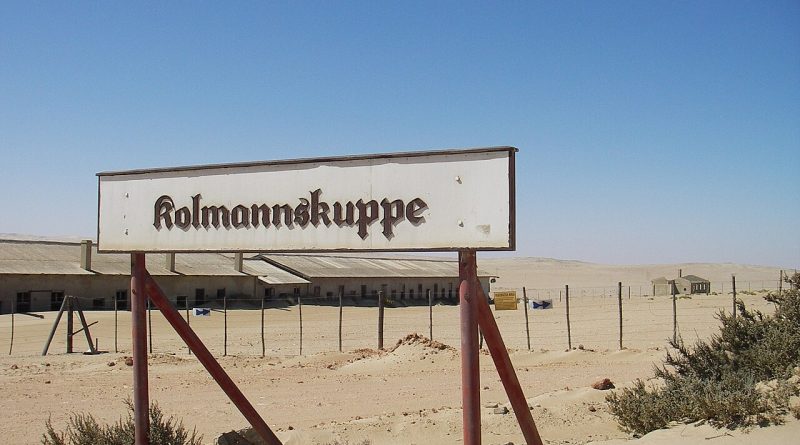
Kolmanskop: The Diamond Ghost Town That Made Men Millionaires Overnight – Then Vanished Into the Sand
One evening in April 1908, a Namibian railway worker named Zacharias Lewala was shovelling sand off the railroad tracks in the Namib Desert when something caught his eye in the low light. Small stones, gleaming in the dust.
They were diamonds.
Lewala was not rewarded for his discovery. He was not given a bonus or a share of what followed. His name was noted in the record and then largely forgotten. But the stones he found that April evening triggered one of the most extraordinary boom-and-bust stories in history — and left behind one of the most hauntingly beautiful ghost towns on earth.
How the Kolmanskop Diamond Ghost Town Was Born
The Diamond Rush of 1908
Within months of Lewala’s discovery, prospectors were flooding into the area from across the German colonial empire. What they found was almost unimaginable — diamonds lying on the surface of the Namib Desert, scattered in the sand, visible to the naked eye in the morning light. In those first frantic months, men were picking up fortunes with their bare hands.
By 1912, a full town had sprung up in the desert: Kolmanskop. That year alone it produced one million carats of diamonds — 11.7% of the entire world’s diamond production. The wealth was staggering and immediate.
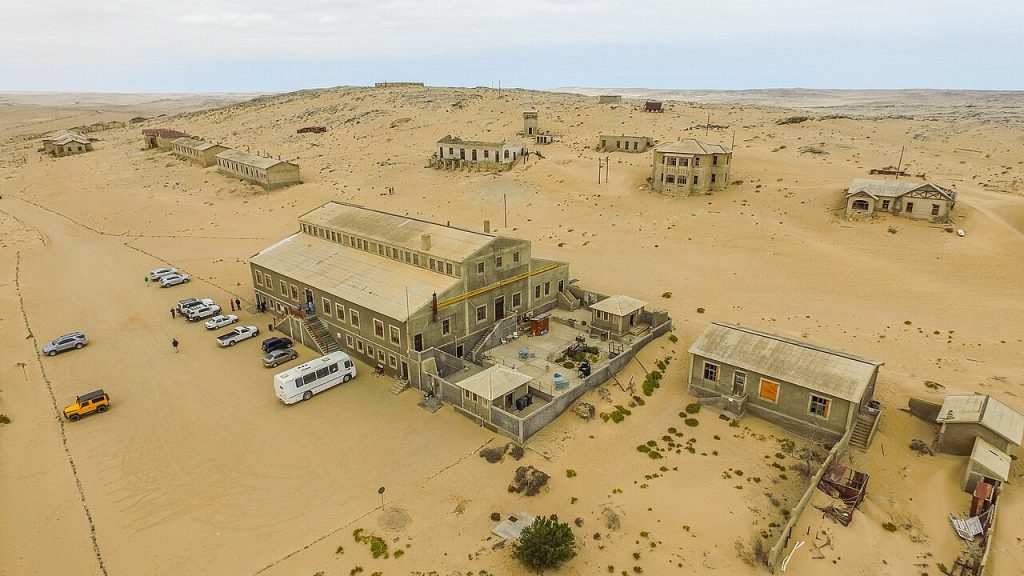
What Was Built in the Desert
The town constructed to house that wealth was extraordinary. German colonial architects designed grand mansions for mine managers and engineers. A hospital was built — equipped with the first X-ray machine in the entire southern hemisphere. There was a school for 50 students, a post office, a theater, a concert hall, a casino, a bowling alley, a butcher, a baker, a lemonade factory, and an ice factory. Fresh water was shipped in by rail across the desert.
A tram connected Kolmanskop to the nearby port city of Lüderitz. In the middle of one of the world’s most inhospitable environments, the diamond miners had built a small, complete piece of German civilization — with Viennese sausages, opera performances, and everything in between.
3 Reasons the Kolmanskop Ghost Town Collapsed
Reason 1: World War One
World War One disrupted diamond markets and temporarily shut the mines. The German colonial administration that had built and managed Kolmanskop was ended, and the town never fully recovered its previous confidence.
Reason 2: Richer Deposits Found Elsewhere
In 1928 came the fatal blow. Richer diamond deposits — far richer than anything Kolmanskop had ever produced — were discovered further south near the Orange River. Overnight, the economic logic of staying in Kolmanskop evaporated completely.
Reason 3: The Desert Moved In
The exodus was gradual at first, then accelerating through the 1930s and 1940s. The last resident left Kolmanskop in 1956. The desert, held back for decades by the constant maintenance of human habitation, immediately began its reclamation. Sand poured through doorways and windows. Floors disappeared beneath drifting dunes. The bowling alley and theater filled with sand. Bathtubs, pianos, and children’s toys were slowly buried.
What Kolmanskop Looks Like Today
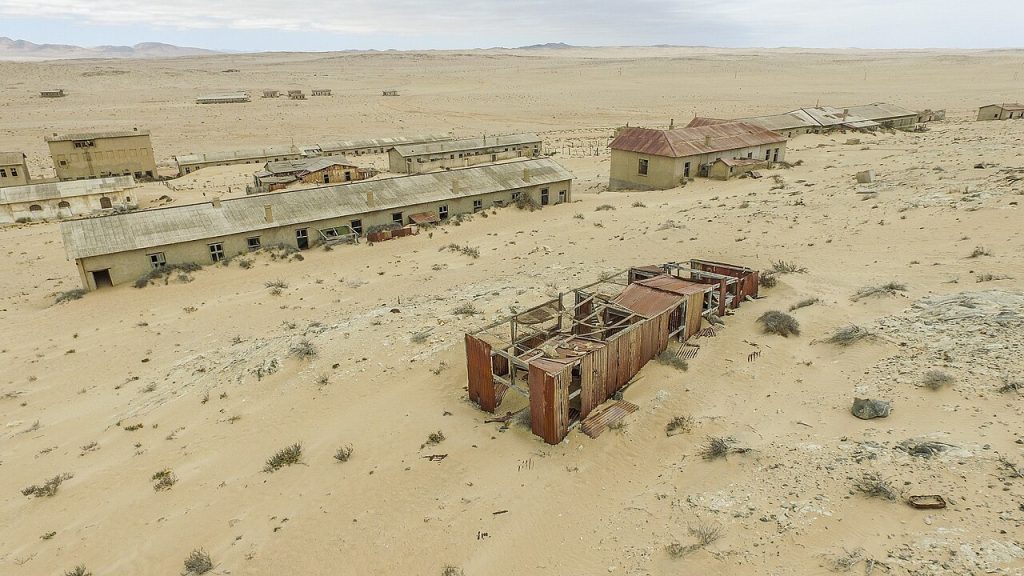
Today the Kolmanskop ghost town is one of the most photographed abandoned places in the world — and it is easy to understand why. The combination of crumbling German colonial architecture, bright wallpaper peeling from half-buried walls, and rooms filled floor-to-ceiling with sand creates images of breathtaking, eerie beauty.
In some houses, sand has filled rooms to window height. In others, only the tops of doorframes are still visible above the dunes. The desert is slowly and methodically swallowing everything — a process that will eventually erase the town as completely as if it had never existed.
According to Wikipedia’s history of Kolmanskop, the town has been developed as a tourist attraction since 2002, accessible via guided tours from Lüderitz. The X-ray machine is still there. The bowling alley is still there. And somewhere beneath the sand, almost certainly, there are still diamonds.
Frequently Asked Questions About Kolmanskop Ghost Town
Where is Kolmanskop ghost town located?
Kolmanskop is located in the Namib Desert in southern Namibia, approximately 10 kilometers inland from the port city of Lüderitz.
Can you visit Kolmanskop today?
Yes. Kolmanskop is open to tourists via guided tours departing from Lüderitz. Morning tours are recommended for the best photography light. Entry requires a permit obtainable through tour operators in Lüderitz.
Why was Kolmanskop abandoned?
Kolmanskop was abandoned because richer diamond deposits were discovered near the Orange River in 1928, making the Kolmanskop mines economically unviable. The last residents left in 1956.
Are there still diamonds at Kolmanskop?
Possibly. Some diamonds were almost certainly overlooked during the mining era and are now buried beneath the advancing sand dunes. However, the area remains within a diamond mining restricted zone.
Want to explore more abandoned places that nature is slowly reclaiming? Read our story about [Hashima Island ] — the Japanese coal mining island that was once the most densely populated place on earth.