The Carleton Island Villa: A Haunted Gilded Age Palace Left to Rot for a Century
There is a profound, poetic sorrow that hangs over the ruins of an island fortress. While mainland abandoned mansions frequently fall prey to suburban development, urban sprawl, or immediate demolition, an estate marooned on an island is left entirely at the mercy of the elements. Surrounded by water, isolated from humanity, and battered by seasonal gales, these structures decay at an entirely different pace. Among all the abandoned luxury houses dotting the North American landscape, none possess the eerie, majestic isolation of the legendary carleton island villa.
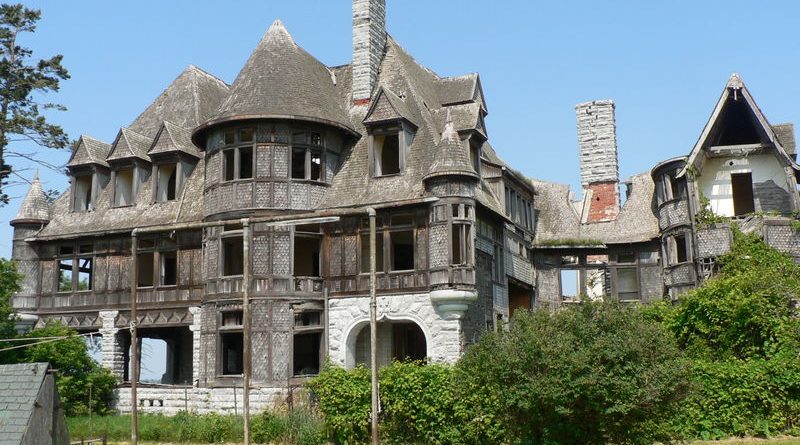
Perched on a rugged bluff overlooking the St. Lawrence River in upstate New York, this monumental stone and wood structure has stood entirely vacant for over eighty years. Once a vibrant playground for the ultra-wealthy elite during the peak of American industrialization, it now resembles a hollow skull rising from the treeline.
To uncover the secrets of this island ruin is to step directly into a narrative of immense wealth, sudden personal tragedy, wartime scrap metal raids, and a century of architectural decay that has left a multi-million-dollar estate completely untouchable.
The Vision of Charles Wyckoff: Typewriter Millions and Island Dreams
To trace the origins of the carleton island villa, one must examine the booming American economy of the late 19th century. This was an era defined by gilded age history, where industrialists made unfathomable fortunes overnight by automating the modern world. Among these newly minted barons was Charles William Wyckoff.
Wyckoff accumulated his immense fortune as the marketing mastermind behind the Remington Typewriter Company. By successfully convincing corporations, governments, and small businesses worldwide that the typewriter was an absolute necessity for modern commerce, Wyckoff secured a level of wealth that allowed for unprecedented luxury.
Looking for a spectacular summer retreat to escape the sweltering heat of New York City, Wyckoff fell in love with the Thousand Islands region—a breathtaking archipelago stretching across the US-Canadian border that had quickly become the premier summer colony for America’s corporate elite. In 1894, he acquired a prime 7-acre plot on the tip of Carleton Island and hired William Henry Miller, a celebrated architect famous for his work at Cornell University, to design a summer palace that would stun high society.
Architectural Splendor: The Anatomy of the Villa
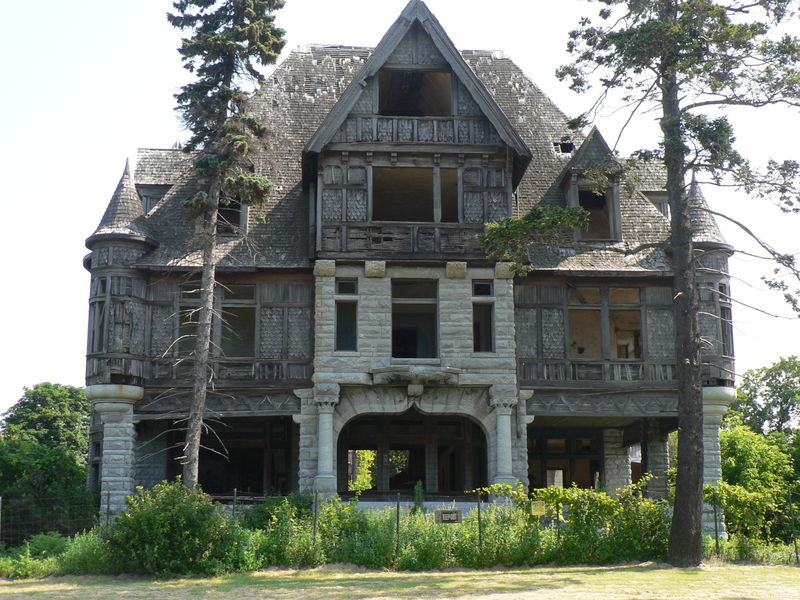
Construction began in earnest in 1894, requiring an extensive logistical operation to ferry metric tons of premium building materials across the deep, fast-moving currents of the St. Lawrence River. Miller envisioned a sweeping, multi-story structure that blended the rugged strength of Romanesque Revival architecture with the elegant, intricate whimsy of the American Shingle style.
The resulting structure was an absolute marvel of turn-of-the-century engineering and aesthetic design.
Key Structural Features of the Estate:
- Total Bedrooms: 30 expansive chambers designed for family and high-society guests
- The Foundation: A massive, hand-cut stone basement built directly into the bedrock of the island bluff
- The Tower: A soaring, three-story observation turret offering panoramic views of the river and oncoming steamships
- The Hearth Network: Fourteen independent, custom-carved stone fireplaces running throughout the main salons
- The Outbuildings: A sprawling complex including a dedicated carriage house, a private utility station, and an extensive deep-water boat house
The villa was surrounded by meticulously planned stone terraces, formal gardens, and sweeping lawns that ran directly down to the water’s edge. The interior was outfitted with the absolute finest materials money could buy: rich, old-growth timber paneling, stained-glass windows that cast vibrant hues across the formal dining spaces, and a complex early plumbing and heating system that provided mainland luxuries to an isolated island outpost.
The estate was built to serve as a generational legacy for the Wyckoff family—but the universe had a tragic, immediate twist of fate in store.
A Sudden Knockout: The Tragedy That Cursed the Island
In the summer of 1895, construction was rapidly drawing to a close. The finishing touches were being applied to the intricate woodwork, the furniture was being cataloged, and the family was preparing to host their inaugural summer gala. Charles Wyckoff had achieved his ultimate dream: a private, island paradise that cemented his status among the elite.
However, just one month before the family was scheduled to officially move into the completed mansion, tragedy struck with terrifying speed.
On July 11, 1895, Charles Wyckoff suffered a sudden, catastrophic stroke inside the mansion and died instantly. He was only 54 years old. The patriarch never got to spend a single night living in his completed masterpiece.
[1894: Construction Begins] ──> [1895: Wyckoff Dies Suddenly] ──> [1927: General Electric Sale] ──> [1940s: Wartime Asset Stripping] ──> [Modern Day: Untouchable Ruin]
The devastating loss cast a permanent, dark shadow over the property. While Wyckoff’s heirs attempted to use the villa for a few subsequent summers, the echoing halls were entirely consumed by grief. The house no longer felt like a celebratory retreat; it felt like a monument to a broken dream. By the onset of the Great Depression, the family stopped visiting the island entirely, boarding up the windows and leaving the home to face the brutal northern winters alone.
World War II and the Great Asset Stripping
As the decades marched on, the villa began its slow, painful slide into the ranks of America’s great abandoned mansions. In 1927, the Wyckoff estate sold the property to a subsidiary of the General Electric company. General Electric initially planned to demolish the historic villa and construct a massive, state-of-the-art corporate retreat and resort complex for its executives.
However, the economic collapse of the 1930s permanently halted those plans. The property was locked behind corporate bureaucracy, completely ignored by its owners, and left entirely unguarded.
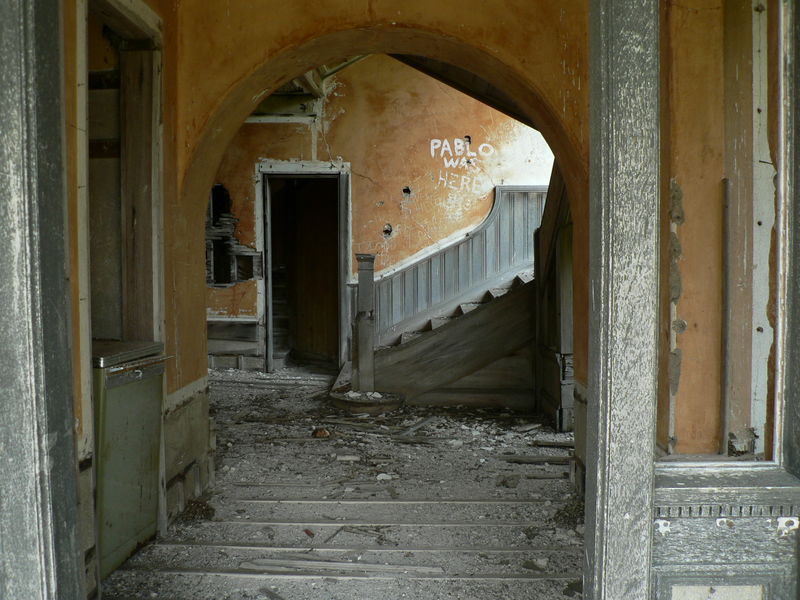
The definitive death blow to the villa’s structure came during the mobilization for World War II. Contractors were permitted to enter the property to salvage valuable industrial materials for the war effort. With zero regard for architectural preservation, crews systematically gutted the interior.
Massive sections of the home’s structural support beams were hacked away to extract valuable copper piping and iron ductwork. Entire wings of the home were destabilized just to remove the premium industrial wiring. Most tragically, the grand, multi-story wooden wrap-around porches were completely chopped down to salvage the rare, old-growth timber. This structural violation left the upper floors completely exposed to the elements, accelerating the decay exponentially.
This systematic corporate and wartime destruction mirrors the heartbreaking asset stripping we analyzed in our deep dive into the history of Lynnewood Hall and the rapid environmental decay found inside the abandoned Mike Tyson mansion. In every instance, once the protective perimeter of human occupancy is removed, a home can be entirely unraveled in a matter of years.
Inside the Ruin: What Remains Today
Today, the Carleton Island Villa stands in a state of advanced, breathtaking decay that captures the imagination of historians and urban explorers worldwide. Because it is located on a private island, it has been spared from the rampant arson and heavy graffiti that destroys mainland ruins, transforming it into a pristine, natural time capsule of deterioration.
1. The Floating Stone Facade
Because the entire first floor of the wrap-around porch was completely stripped away during the 1940s, the massive upper wooden gables of the house appear to be floating in mid-air, supported only by the central stone hearths and the sturdiest of the remaining structural pillars. It is a terrifying and beautiful feat of structural survival.
2. The Great Stone Hearths
While the wood has rotted away, the fourteen massive stone fireplaces built by Gilded Age stonemasons stand completely unyielding. They rise through the center of the collapsed floors like ancient stone obelisks, completely unaffected by a century of torrential rains and heavy snowpacks.
3. The Reclaiming Forest
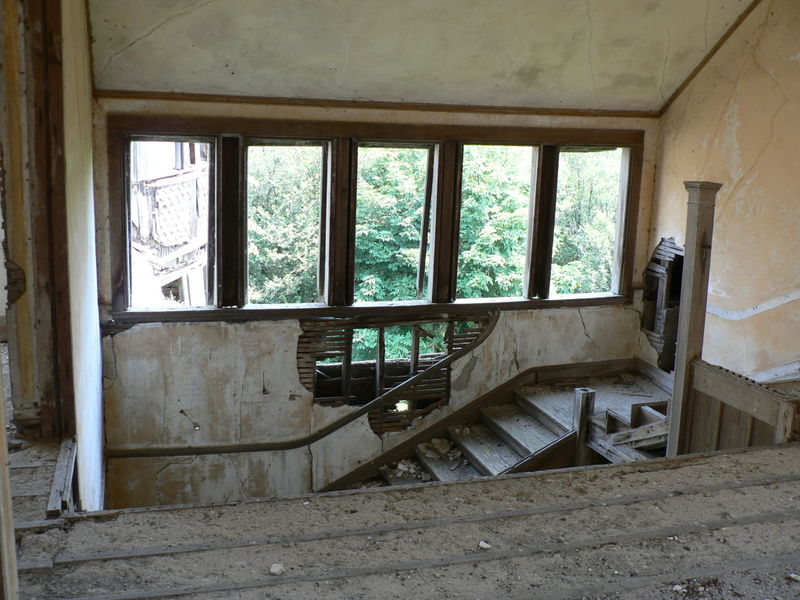
Over the last eighty years, nature has aggressively moved inside the mansion. Trees have grown directly through the floorboards of the grand salons, their branches reaching out through the broken glass of the window frames. Vines cover the remaining shingles, slowly pulling the structure down into the island soil.
The Real Estate Paradox: Why It Can’t Be Saved
For years, the Carleton Island Villa has been listed on the real estate market for relatively low prices—often hovering around several hundred thousand dollars. To the average observer, this seems like an unbelievable bargain for a massive historical estate on a private island.
However, according to architectural assessments archived by local preservation registries and regional real estate trackers like Zillow Group, the property represents a massive financial paradox.
Because the home has sat completely open to the elements for decades, the wood framing is entirely compromised by dry rot and structural instability. Experts estimate that it would cost tens of millions of dollars just to stabilize the existing structure before any actual restoration work could even begin. Furthermore, because it sits on an island without municipal water, electrical grids, or bridge access, transporting modern construction equipment and crews across the river makes a restoration attempt a logistical and financial impossibility.
The Silent Sentinel of the St. Lawrence
The enduring allure of the carleton island villa proves that abandoned luxury houses hold a permanent grip on our cultural curiosity. They serve as physical reminders of the impermanence of human success and ambition. Charles Wyckoff built a palace to shout his success to the world, only for the universe to turn his grand statement into a silent, island ghost story.
As it stands today, the villa remains a beautiful, tragic monument to the Gilded Age—a spectacular architectural masterpiece that continues to defy gravity, waiting patiently on its lonely bluff as the river flows silently past its hollow windows.