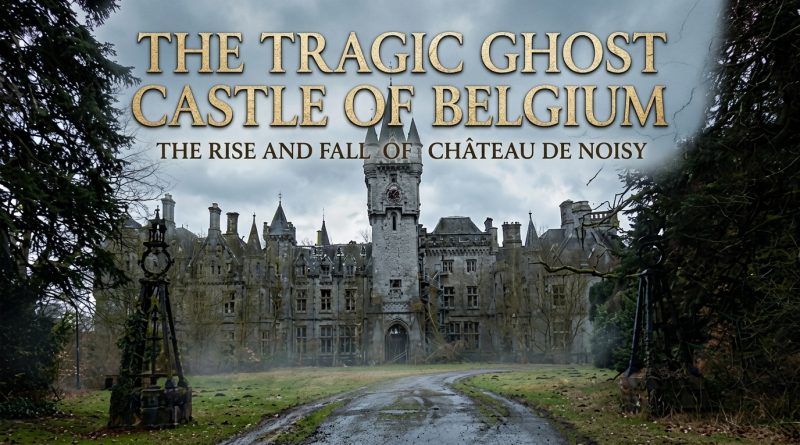
The Tragic Ghost Castle of Belgium: The Rise and Fall of Château de Noisy
There is a distinct, dark romance attached to the ruins of European aristocracy. While North American abandoned mansions reflect industrial wealth and the sudden collapse of modern corporate empires, the forgotten castles of Europe carry the weight of centuries-old lineages, world wars, and aristocratic collapse. Among all the abandoned luxury houses that have ever captured the fascination of the global urban exploration community, few hold a candle to the heartbreaking, gothic majesty of Belgium’s legendary chateau de noisy.
Also known as Miranda Castle, this breathtaking Neo-Gothic masterpiece stood for decades as a striking, multi-turreted silhouette rising above the dense forests of Celles, in the Namur province of Belgium. Once a sanctuary for French nobility fleeing execution, and later a bustling home for hundreds of children, it ultimately transformed into a hollow, rotting fairy-tale shell.
To trace the timeline of this legendary estate is to explore a narrative of political revolution, wartime occupation, catastrophic corporate neglect, and the heartbreaking finality of an architectural masterpiece that the world simply refused to save.
The Birth of Miranda Castle: A Sanctuary from the Guillotine
The origin of Château de Noisy is directly tied to a period of intense blood and political upheaval. During the height of the French Revolution in the late 18th century, the aristocratic Liedekerke-De Beaufort family was forced to flee their ancestral home in France to escape the radical revolutionary tribunals and the looming threat of the guillotine.
Seeking absolute safety, the family retreated to a quiet, rural estate in Belgium. They initially took up residence in a modest farm on the secluded property. However, as the decades passed and the family re-established their immense wealth and noble status, they decided to construct a permanent monument to their resilience—a grand castle that would command respect across the European high society.
In 1866, Count Liedekerke-De Beaufort commissioned Edward Milner, a highly celebrated English landscape architect, to design the estate. Milner envisioned a sweeping, romantic palace that perfectly captured the peak of the Neo-Gothic Revival movement.
Construction began immediately, utilizing premium, hand-carved stone hauled into the isolated forest. Milner oversaw the laying of the foundations and the rising of the iconic spires, building a monument that perfectly mirrored the architectural obsession with symmetry, grandeur, and classical artistry also seen across the Atlantic during America’s gilded age history.
Architectural Masterpiece: The Anatomy of a Neo-Gothic Dream
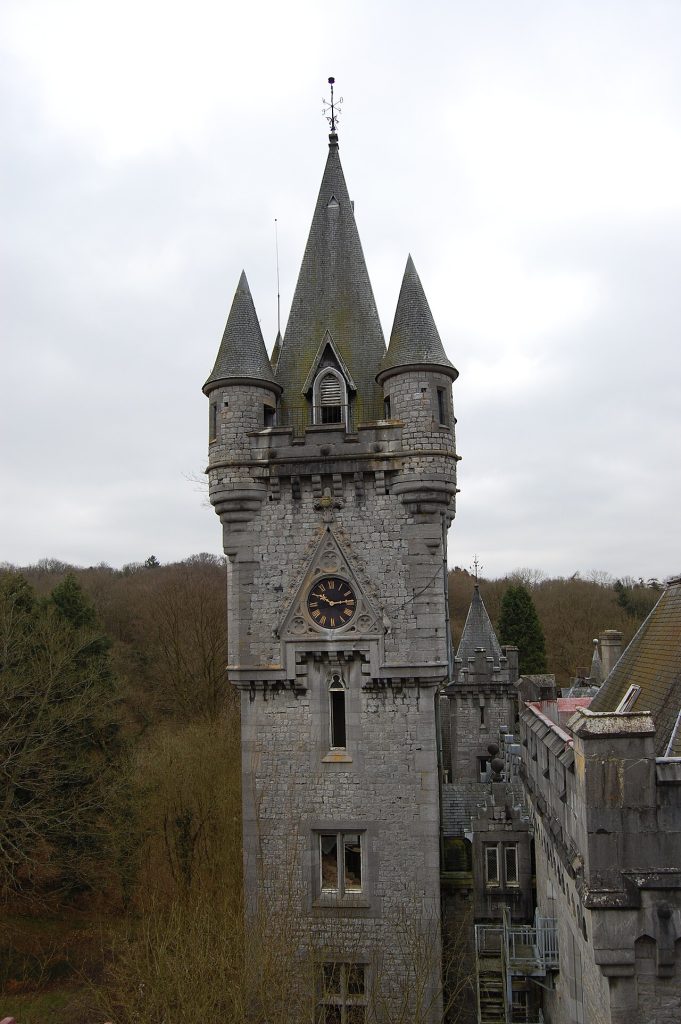
Following Edward Milner’s death in 1884, the French architect Paul Choisé was brought in to finalize the extensive project. Construction was finally completed in 1907 after more than forty years of continuous labor and staggering financial expenditure.
The resulting structure was an absolute triumph of romantic, fairy-tale architecture that rivaled the grandest royal residences in Europe.
Key Structural Specifications of the Castle:
- The Clock Tower: A soaring, central tower rising 183 feet (56 meters) into the sky, housing a massive, custom-engineered mechanical clock.
- Window Count: Over 500 individual, arched window panes designed to flood the interior stone galleries with natural light.
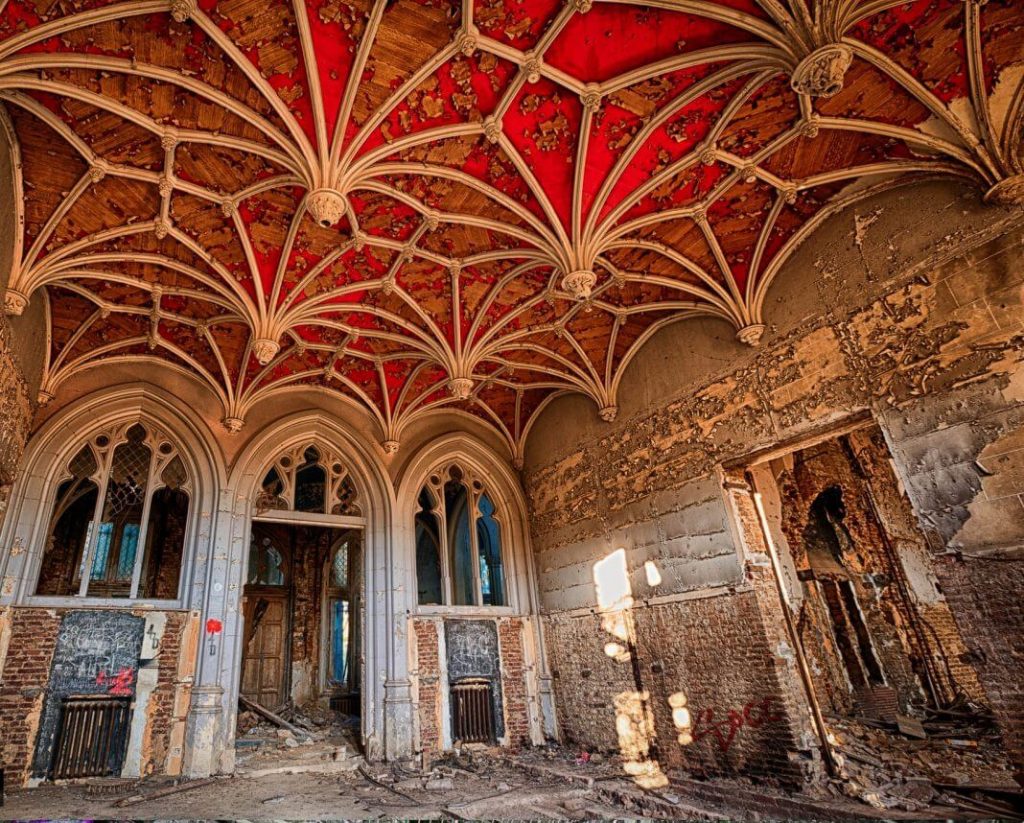
- The Great Blue Salon: A massive, opulent formal ballroom lined with rich stuccowork, imported marble columns, and intricate vaulted ceilings.
- The Outbuilding Network: A vast complex of stone stables, carriage houses, and manicured terrace lawns stepping down into the forest.
The interior of the château was a dizzying showcase of luxury. The floors were laid with rich, pattern-blocked parquetry and polished flagstones. The walls were adorned with custom-sculpted plaster details, expansive open fireplaces carved from rare marble, and massive open staircases that wound through the central core of the castle.
For the first few decades of the 20th century, the castle served as the pride and joy of the Liedekerke-De Beaufort family—but global warfare was about to alter its destiny forever.
The Home of the “Station Children”: A Sudden Shift in Purpose
The peaceful aristocratic life inside Château de Noisy was abruptly shattered by the onset of World War II. During the Battle of the Bulge in late 1944, Nazi forces aggressively advanced into Belgium and systematically seized the strategically isolated castle, transforming the luxury private residence into a temporary military outpost and command center.
While the property managed to survive the heavy shelling and combat that leveled surrounding villages, the family never truly re-established permanent residency after the war. The operating costs of maintaining a massive, multi-story castle in a post-war economy proved to be an overwhelming financial burden.
[1866: Construction Begins] ──> [1907: Castle Completed] ──> [1944: WWII Nazi Occupation] ──> [1950-1970s: The Orphanage Era] ──> [1991: Total Abandonment] ──> [2017: Demolition]
In 1950, a creative solution emerged. The Liedekerke-De Beaufort family leased the entire estate to the National Railway Company of Belgium (SNCB). The corporate entity transformed the grand palace into a dedicated holiday home and convalescent camp for the children of railway employees.
Renamed the “Home des Matelots” (or the Home of the Station Children), the castle’s grand ballrooms and master suites were converted into clean dormitories, schoolrooms, and communal dining halls. For nearly thirty years, the halls echoed with the laughter and footsteps of hundreds of children playing under the painted ceilings—a unique era of occupancy that contrasts heavily with the total isolation enforced at the world’s most banned tourist places.
The Dark Era: Total Abandonment and Decades of Rot
By the late 1970s, the operating costs and stringent new safety regulations required to run a children’s facility inside a century-old castle became completely unsustainable for the railway company. In 1977, the SNCB officially terminated their lease, packed up their equipment, and walked away from the property.
The Liedekerke-De Beaufort family desperately searched for a viable buyer or a corporate partner to restore the castle. Several lucrative offers emerged, including a major proposal to convert the historic palace into a high-end luxury hotel resort. However, the family staunchly rejected all commercial offers, preferring to let the building stand empty rather than see their ancestral noble home commercialized.
In 1991, the water pumps were permanently turned off, the maintenance staff was dismissed, and Château de Noisy was officially surrendered to the dark.
What followed was a masterclass in unchecked architectural decay. Deprived of heat, water systematically penetrated the roof tiles during freezing Belgian winters. Dry rot swept through the structural timber framing like a wildfire, causing massive, multi-ton sections of the upper floors to cave into the lower salons.
The Mecca of URBEX: An Icon of Post-Apocalyptic Beauty
During its twenty-six years of total vacancy, Miranda Castle achieved absolute legendary status within the global urban exploration (URBEX) community. Photographers traveled from across continents to hike through the Belgian woods, bypass security warnings, and step inside what was widely considered the most beautiful ruin on earth.
The decay inside the castle was remarkably poetic:
- The Moss-Covered Grand Staircase: Rain pouring through the collapsed central skylight turned the grand stone staircase into a cascading indoor waterfall, allowing bright green moss and ferns to carpet the steps.
- The Fallen Clock Face: The massive hands of the central clock tower eventually froze in place, casting long, dramatic shadows over the skeletal framing of the empty tower rooms.
- The Peeling Plasterwork: The rich Neo-Gothic stuccowork along the ceilings systematically peeled away, raining fine white powder down onto the rotting floorboards below.
The Heartbreaking Finale: The 2017 Demolition
As the castle’s fame grew online, so did the structural dangers. Trespassers regularly looted the remaining marble fireplaces, vandals set small fires inside the structural wings, and a massive fire in 2014 completely gutted the eastern wing of the building.
The Count of the property applied for a legal permit to completely demolish the structure, citing extreme public safety liabilities. Despite immense, passionate global backlash from historical preservation societies, architectural groups, and local communities who pleaded to have the building classified as a protected historical landmark, the Belgian courts side with the landowner.
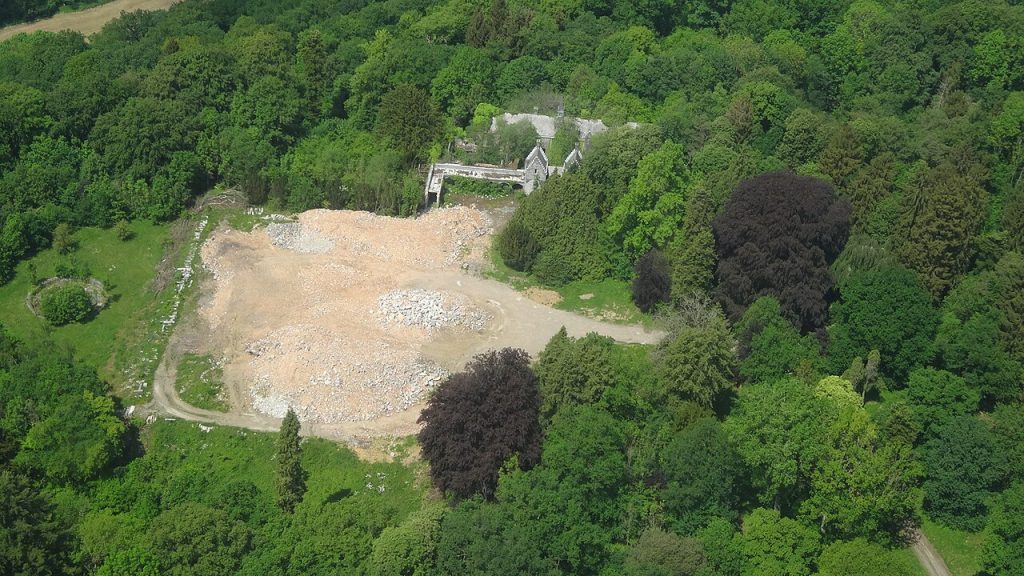
According to archival tracking by major international architectural preservation registries like The National Trust for Historic Preservation, the wrecking balls officially arrived on the property in late 2016. By October of 2017, the final remaining spires of Château de Noisy were completely leveled, and the debris was cleared away, leaving nothing behind but an empty clearing in the woods.
The Ghostly Reminder of Impermanence
Though Château de Noisy no longer physically stands, its digital footprint remains an unyielding powerhouse within the abandoned mansions niche. The castle stands as a warning of how quickly cultural treasures can slip through our fingers when preservation efforts fail.
It proves that whether an estate is a contemporary mansion built by a boxing champion, a Gilded Age palace in Pennsylvania, or a Neo-Gothic castle in the forests of Europe, all human architecture is locked in a constant battle against time—and without active human intervention, the house will always lose.