Detroit Packard Plant: 5 Chapters in the Rise and Fall of America’s Most Iconic Abandoned Factory
The Detroit Packard Plant is one of the most powerful symbols of American industrial history. For over 50 years it sat as the largest abandoned factory in the world — 3.5 million square feet of crumbling concrete on Detroit’s east side, swallowed by graffiti, fire damage, and the relentless advance of nature. A building that once employed 40,000 workers and helped win a world war, left to rot for decades while the city around it tried to recover.
The story of the abandoned Packard factory is really Detroit’s story — and in many ways, America’s story. Here are its 5 defining chapters.
Chapter 1: The Detroit Packard Plant That Changed American Manufacturing
Built to Be the Best Factory in the World
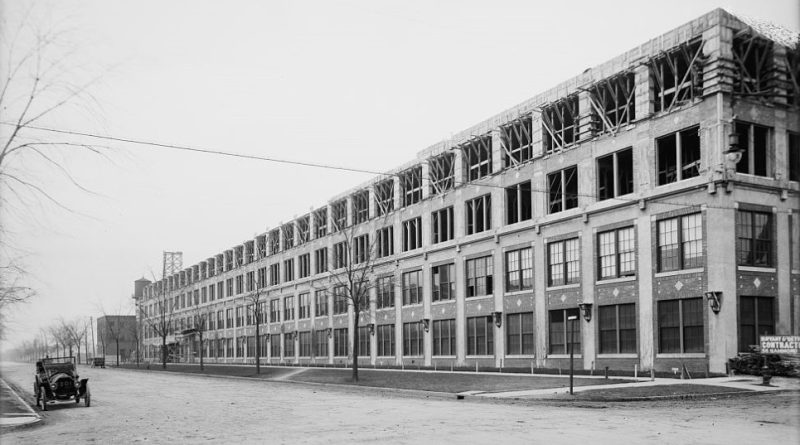
When the Packard Motor Car Company broke ground on its new Detroit factory in 1903, they commissioned legendary architect Albert Kahn to design something revolutionary. Kahn used reinforced concrete — a radical technique at the time — to create a structure that was fireproof, flexible, and flooded with natural light. It was the most advanced automobile manufacturing facility in the world.
Construction completed in 1911 after 6 expansions, giving the Detroit Packard Plant a total floor area of 3.5 million square feet — the equivalent of over 60 football fields. It had its own internal road network, its own power plant, and its own railroad siding. It was essentially a self-contained industrial city within the city of Detroit.
The Golden Age of Packard Cars
Packard cars were not ordinary automobiles. They were the vehicles of presidents, royalty, and the ultra-wealthy. The brand introduced the modern steering wheel. It built America’s first 12-cylinder engine. Its vehicles were synonymous with craftsmanship and prestige. At its peak the factory employed 40,000 workers producing some of the most celebrated luxury cars ever made in America.
Chapter 2: When the Abandoned Packard Factory Helped Win World War II
One of the most remarkable and least-known chapters of the Detroit Packard Plant’s history came during World War II. The factory was converted from luxury car production to manufacturing Rolls-Royce Merlin aircraft engines — the same engines that powered the iconic Spitfire, Hurricane, and P-51 Mustang fighter planes used by Allied forces.
The same hands that had been building luxury cars for America’s elite were now helping to win the most destructive war in human history. At its wartime peak, the plant was operating around the clock, 7 days a week. It was one of the most critical industrial facilities in the entire Allied war effort.
Chapter 3: The Fall — How the Largest Abandoned Factory in the World Was Created
The End of Packard Cars
After the war, Packard struggled to compete in a rapidly changing automotive market. General Motors, Ford, and Chrysler dominated the mass-market space. Packard merged with Studebaker in 1954 hoping to survive — but the merged company never turned a profit. The last true Packard rolled off the Detroit production line in 1956. The factory closed, idling thousands of workers overnight. The Packard brand itself was discontinued two years later.
Decades of Detroit Urban Decay
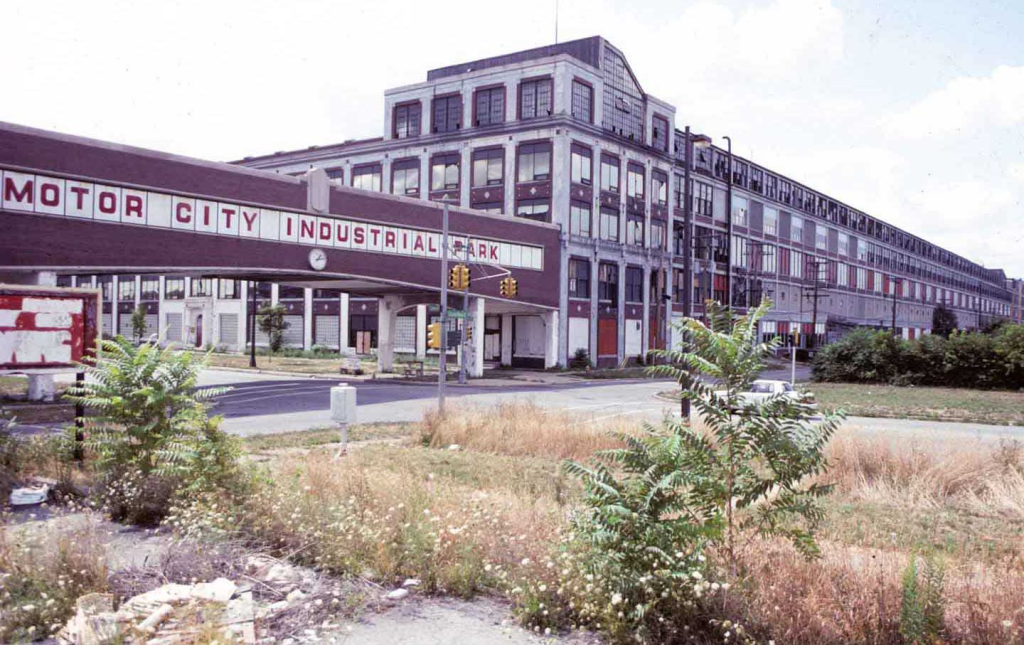
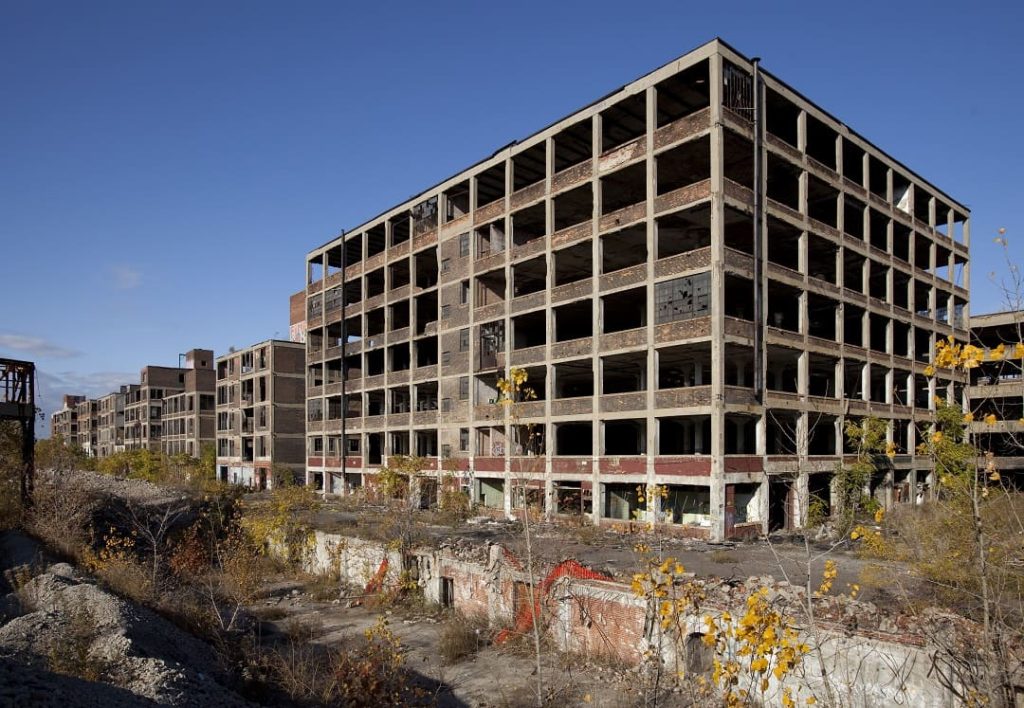
For a while, various small businesses occupied portions of the enormous complex. But piece by piece the factory emptied. By the late 1990s it was completely vacant. Legal disputes over ownership left it in limbo with no tenants, no maintenance, and no clear future. Scrappers stripped copper wiring. Fires broke out repeatedly. Graffiti artists covered every surface. Nature moved in through the broken windows and collapsed roof sections.
The Detroit Packard Plant became the defining image of Detroit urban decay — a 3.5 million square foot ruin that photographers, filmmakers, and urban explorers traveled from around the world to document. According to Wikipedia’s detailed history of the Packard Automotive Plant, the complex was frequently cited as the largest abandoned factory in the world during this period.
Chapter 4: The Long Road to Demolition
In 2013, Peruvian developer Fernando Palazuelo purchased the Detroit Packard Plant at a Wayne County tax foreclosure auction for just $405,000 — an almost unimaginably low price for 3.5 million square feet of real estate, even in ruins. He promised a $350 million mixed-use redevelopment. Nothing happened. No construction began. No maintenance was performed. Back taxes went unpaid.
In 2022, after years of legal battles, a court ordered Palazuelo to demolish the dangerous structure within 90 days. When he failed to comply — or even appear before a judge — the City of Detroit took over. Mayor Mike Duggan called the ruins “a weight around the neck of Detroit’s recovery for 68 years.” A $42 million demolition project began in October 2022, funded partly by the American Rescue Plan Act.
The two-year demolition was completed in December 2024. Nearly all of the original 3.5 million square foot abandoned Packard factory was removed — with only 2 historic administration buildings preserved for potential redevelopment.
Chapter 5: The Packard Plant Detroit 2026 — An Uncertain Future
In December 2025, the City of Detroit announced an ambitious $50 million “Packard Park” redevelopment plan — transforming the site into a mixed-use hub with housing, a 400,000 square foot manufacturing facility, an indoor skate park, and the Museum of Detroit Electronic Music. It looked like the Detroit Packard Plant was finally getting its second chapter.
Then in March 2026, Detroit’s newly elected Mayor Mary Sheffield’s administration announced the plan had collapsed. The Letter of Intent had expired and the city was stepping back to explore new options. As of mid-2026, the future of one of Detroit’s most historically significant sites remains completely uncertain — the latest chapter in a story that has never been straightforward.
Frequently Asked Questions About the Detroit Packard Plant
Is the Detroit Packard Plant still standing?
Most of the plant has been demolished. The two-year demolition completed in December 2024 removed the majority of the 3.5 million square foot complex. Only 2 historic administration buildings remain standing as of 2026.
Can you visit the Packard Plant in Detroit?
The site is no longer open to urban explorers as it was in previous years. Most of the buildings have been demolished and the site is fenced and actively managed by the City of Detroit pending redevelopment decisions.
Why was the Packard Plant abandoned?
The Packard Motor Car Company merged with Studebaker in 1954 and produced its last cars in 1956. The factory closed as the brand declined and eventually disappeared in 1958. After brief use by small businesses it fell into complete abandonment by the late 1990s.
Who designed the Packard Plant?
The Detroit Packard Plant was designed by legendary industrial architect Albert Kahn, who pioneered the use of reinforced concrete in factory construction. His design was revolutionary for its era and influenced industrial architecture worldwide.
Love stories of abandoned industrial places? Don’t miss our story about Hashima Island: 7 Shocking Facts About Japan’s Abandoned Battleship Island Nobody Talks About – Abandoned Files – a Japanese coal mining island that was once the most densely populated place on earth, then abandoned in just 3 months.
What do you think should be built on the Detroit Packard Plant site? Share your thoughts in the comments below.
The 1903 plant had no reinforced concrete. That came in 1906, months after it had been used on the Cadillac plant on Amsterdam Street in Detroit. There were many additions to the plant after 1911 as it continued to receive more buildings through the 1920s.