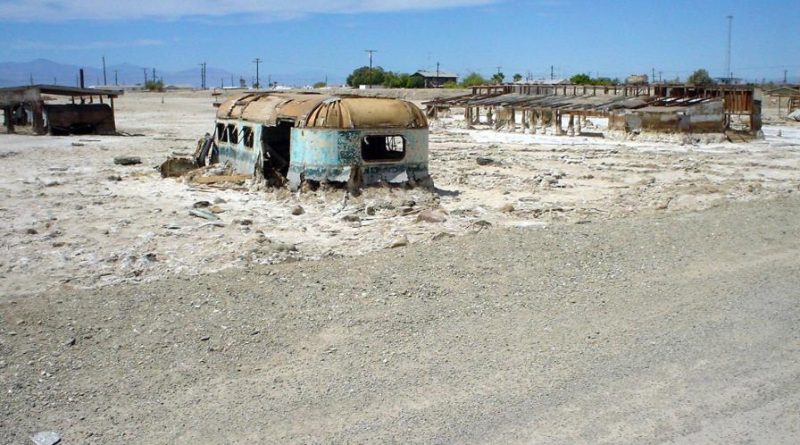
The Salton Sea: How California’s Most Popular Resort in the 1950s Became a 21st Century Toxic Wasteland
In the 1950s and early 1960s, the Salton Sea was the hottest vacation destination in the state of California. More tourists visited it than Yosemite National Park. Frank Sinatra and the Rat Pack performed at its glamorous resort hotels. Speedboat races drew enormous crowds to its shores. Real estate developers promoted it as the next Palm Springs.
Today the Salton Sea is one of the most apocalyptic landscapes in the United States. A shrinking toxic lake surrounded by abandoned resorts, dead fish, and crumbling infrastructure. Its beaches are made not of sand but of crushed fish bones. The air smells of sulfur and decay.
What happened to the Salton Sea is one of the strangest environmental stories in American history.
How the Salton Sea Was Created by Accident
The Salton Sea does not appear on maps before 1905 because it didn’t exist. California’s Salton Sink — a below-sea-level desert basin — was dry land until an engineering accident created an inland sea almost overnight.
In 1905, an irrigation canal diverting water from the Colorado River to the Imperial Valley broke its banks due to engineering failures. For nearly 2 years, the entire flow of the Colorado River poured into the Salton Sink, creating a lake 35 miles long and 15 miles wide in a matter of months. When engineers finally stopped the flow in 1907, a new sea had been created in the middle of the California desert — 227 feet below sea level.
The Golden Age: When the Salton Sea Was More Popular Than Yosemite
How the Resort Boom Happened
In the late 1940s and 1950s, developers recognized the Salton Sea’s potential as a recreation destination. The California Department of Fish and Game introduced corvina, sargo, and tilapia to the sea. The US Navy built a testing facility on its shores. Resort hotels, marinas, yacht clubs, and beachfront communities sprang up around the water.
The Salton Sea Yacht Club became one of the most fashionable social venues in southern California. Celebrities discovered it. At its peak in the early 1960s, the Salton Sea was drawing more than 1.5 million visitors per year — more than Yosemite. Frank Sinatra, the Beach Boys, and Jerry Lewis all performed at venues along its shores.
Why It Was Doomed From the Start
The Salton Sea has no natural outlet. It cannot flush itself the way a natural body of water can. Every gallon of agricultural runoff that drains into it from the surrounding Imperial Valley farmland stays there — along with its load of fertilizers, pesticides, and salts. The sea was slowly poisoning itself from the moment it became a resort destination, though nobody recognized this for decades.
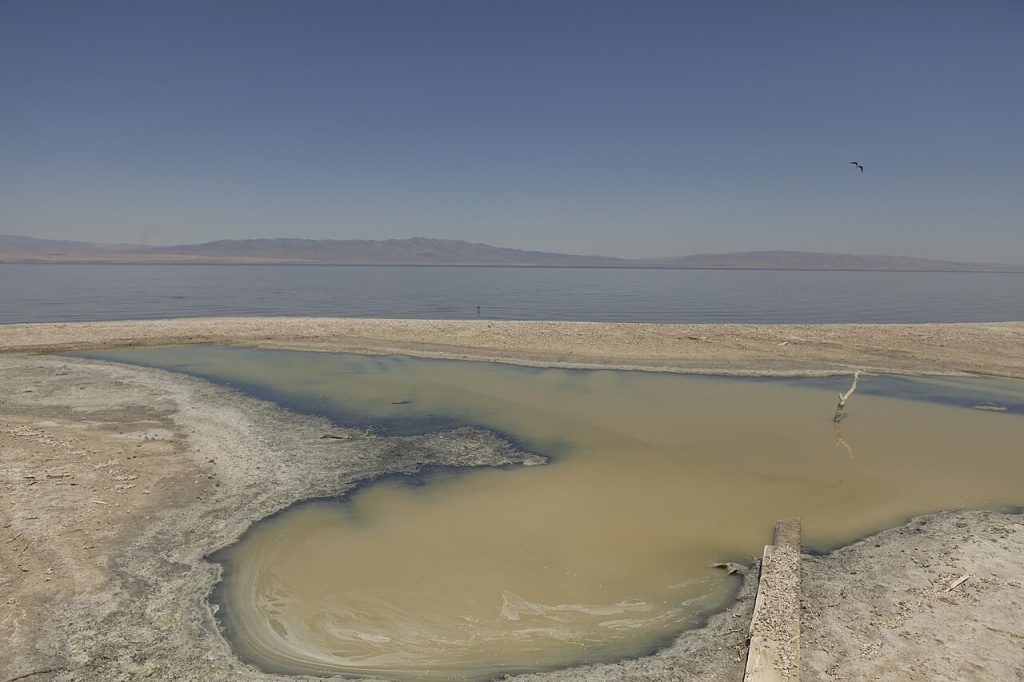
The Ecological Collapse of the Salton Sea
In 1976 and again in 1994, massive floods dumped extraordinary quantities of agricultural chemicals into the sea. The resulting algae explosions consumed the oxygen in the water, triggering mass fish kills that left millions of dead fish rotting on the shores. The stench was overwhelming and drove tourists away permanently. Property values collapsed overnight. Resorts closed. Communities emptied.
The most famous abandoned settlement is Bombay Beach on the sea’s eastern shore — a surreal landscape of rusting trailers, half-submerged structures, and apocalyptic art installations where a small population of around 300 mostly elderly residents still cling to a community that the water is slowly swallowing. According to Wikipedia’s article on the Salton Sea, the sea’s salinity has now surpassed that of the Pacific Ocean and continues to rise.
The Salton Sea Today — California’s Ongoing Environmental Crisis
The Salton Sea is shrinking. As the agricultural water that feeds it is increasingly diverted to California’s growing cities, the lake level drops — exposing a toxic dry lakebed that wind whips into dust storms carrying arsenic, selenium, and other agricultural chemicals into the air. Health authorities have linked the dust to elevated rates of childhood asthma in the surrounding region.
In 2017, a water transfer deal that had been providing the sea with inflow expired, dramatically accelerating the shrinkage. California has allocated hundreds of millions of dollars for mitigation projects, but the scale of the problem continues to outpace the solutions available.
Frequently Asked Questions About the Salton Sea
Where is the Salton Sea located?
The Salton Sea is located in the Colorado Desert of southern California, straddling the border of Riverside and Imperial counties, approximately 150 miles east of Los Angeles.
Why is the Salton Sea dying?
The Salton Sea is dying due to a combination of rising salinity from agricultural runoff, reduced inflow as water is diverted to cities, and decades of accumulated toxins from farming activity in the surrounding Imperial Valley.
Can you visit the Salton Sea today?
Yes. The Salton Sea State Recreation Area remains open to visitors. Bombay Beach and other abandoned communities around the shore are accessible. The area has attracted artists and photographers drawn to its apocalyptic landscape.
Will the Salton Sea ever recover?
Most environmental scientists believe the Salton Sea as it existed in its resort heyday cannot be recovered. Current efforts focus on dust suppression and wetland creation along the shrinking shoreline rather than restoration of the full lake.
Explore more stories of places reclaimed by nature — including [Kolmanskop ghost town], the diamond mining town being swallowed by the Namib Desert.